Subjects

Wednesday, May 13, 2015

Nein Hitler

For our second Unit of Policy, we learned about the purpose and power of the executive branch. We also learned about policies that the executive branch has created and carried out in the past. For our Action Project, we were assigned to research a specific war and a policy during that war in order to determine whether or not our involvement in the war was just. I'm proud of being able to write this in the formal essay structure provided because I'm someone who likes to write more than just five paragraphs.
"The Remilitarisation of the Rhineland." The Remilitarisation of the Rhineland. N.p., n.d. Web. 28 Aug. 2013.
World War II (WWII), was the second global war that took place between September 1, 1939 and September 2, 1945. This involved almost the entire world, from the US, Great Britain and its allies to Germany, Italy and other dictatorships. Most battles occurred in Europe, South-East Asia, and North Africa. Many war strategies were used such as air, ground, naval, chemical and atomic warfare. The immediate cause of this war was the Remilitarization of the Rhineland, but the underlying cause was a lot of Germany being upset after losing WWI and wanting a redo to show their power, and to restore how the country was before.

The United States entered the war on December 7, 1941, about two years after it started. At the time, Franklin D. Roosevelt was President, but by the end of the war the President was Harry S. Truman. Congress allowed Roosevelt to send the troops which he did due to the Pearl Harbor bombing -- a surprise military strike by Japan against the US naval base at Pearl Harbor. President Roosevelt had issued Executive Order 9066 authorizing the Secretary of War to take any measures necessary, he convinced Congress to let him do this by saying he was doing this in order to aid other countries who needed help, and to help stop communism.

This war was unjust for Germany to start in the first place because it was really illogical and the country had no justifiable or logical reason to begin such a war. Hitler’s reasons were all so absurd; he claimed that there was a superior race based on looks and culture which is just racist and quite ignorant. All he wanted was power which is not a reason to kill so many people. However, it was just for the US and other countries to enter the war because they were just trying to stop Hitler, protect innocent lives, and basically stop genocide.

During this war, Hitler executed the Remilitarization of the Rhineland -- several areas of Western Germany. Doing this means he made it possible for Germany to pursue a policy of aggression in Eastern Europe that the demilitarized status of the Rhineland had blocked until then. This was significant because it violated the terms of the Treaty of Versailles and the Locarno Treaties, marking the first time since the end of World War I that German troops had been in this region. This changed the balance of power in Europe from France towards Germany. Hitler’s policy was extremely unjust and illegal because of it violating the Treaty of Versailles. This caused the start of the war, it angered other countries, and also caused Hitler's self-confidence to surge to new heights.

All in all, Germany should not have started this war because nothing good came from it. Invading and remilitarizing Rhineland broke a treaty Germany had made only 20 years ago, and started a second war involving the entire world. They caused millions of deaths of not just soldiers, but innocents, all in order to try and gain power. In the end, nothing good came of this, and Germany ended up back where they started but with much more hatred from the rest of the world.

Work Cited

  • "Executive Order 9066: The President Authorizes Japanese Relocation." Executive Order 9066: The President Authorizes Japanese Relocation. Web. 13 May 2015.
  • "Remilitarization of the Rhineland." Wikipedia. Wikipedia Foundation. Web. 13 May 2015. 

Sunday, May 10, 2015

Circuit Circus

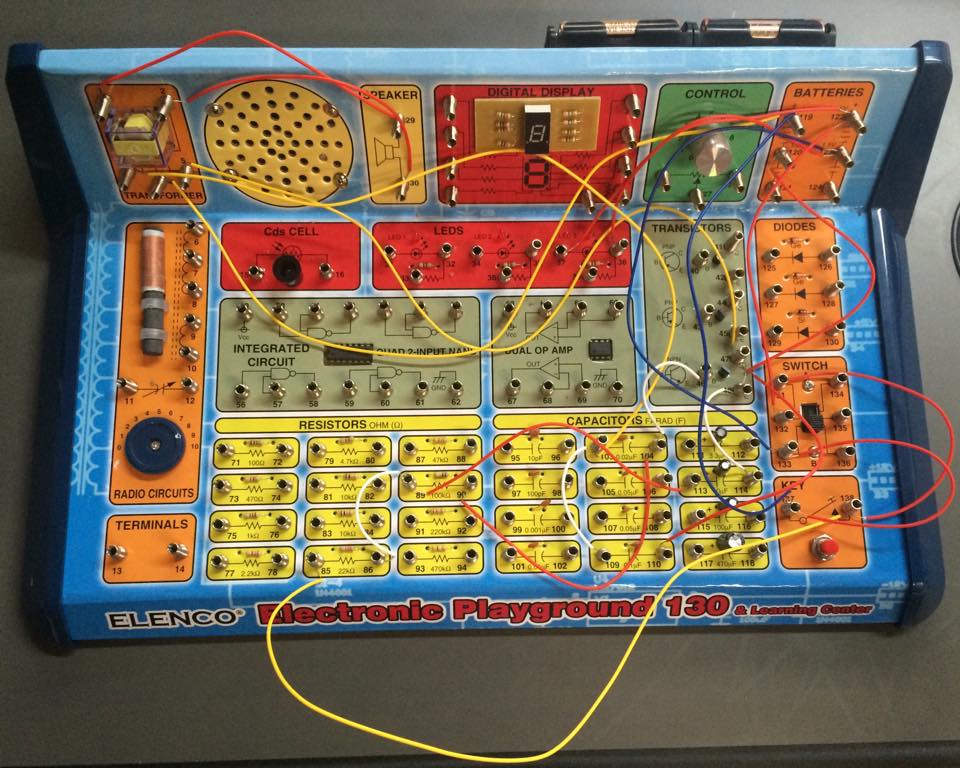
Our second Urban Planning unit is called Power, it is about powering cities and electricity. We learned about different parts of a circuit and how electricity works. Our action project is to design our own efficient electrical plan and to build a circuit with five resistors and two switches. I’m most proud of actually making the circuit work, because it was difficult and there were a lot of wires, but we finally made it work.


11212256_945374838858419_1162001437_n.jpg
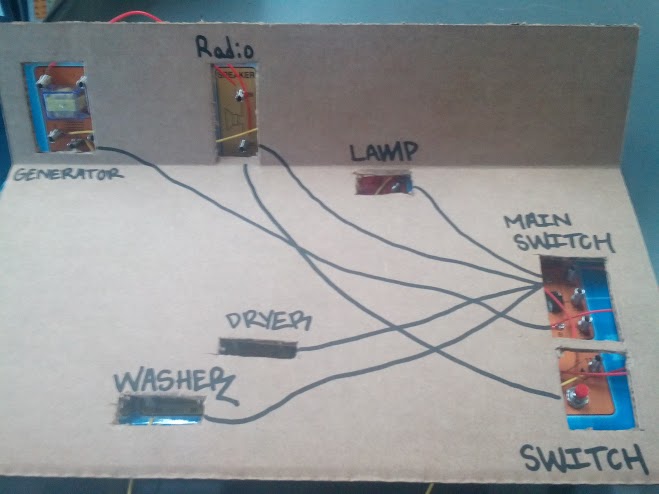
AG Circuit (2015)

AG Diagram (2015)


The LED light represents an LED lamp which saves about 16% of the energy that a regular lamp would use. The transformer represents a solar generator which creates 300 Joules per second. The speaker represents a hand-crank radio which saves 100% of the energy that a regular radio would use because you would crank it yourself, therefore it doesn't use any energy. The resistor represents an energy efficient washer which saves 50% of the energy that a regular washing machine would use. The second resistor represents an energy efficient dryer which saves 15% of the energy that a regular dryer would use.


circuit cover.jpg
MV Cover (2015)


Our circuit uses a total of 6 Volts
An example of Ohm’s Law would be if the speaker had a current of 3 amps, then the resistance is 2 Ohms because:
6V = 3A * x Ohms
x Ohms = 6V / 3A
x = 2 Ohms


There are two types of currents: AC which is an alternating current, and DC which is a direct current. Our circuit is DC because batteries are always DC. 


The circuit board had many options and we came up with our design by simply choosing the options we liked the most. We used the transformer because it distributes energy, the speaker because the sound was fun to mess around with, and the LED light because we wanted to be able to see something happen. Then we added the two resistors, which take up energy, at the end because we needed to have five total. The design changed a lot over time, especially towards the end where we tried to make it work with two different switches.

During the process of building our circuit we encountered a few problems, such as figuring out where to connect the wires in a way to make it all work. But we just remained persistent, kept trying different things, and followed the instructions. Doing that allows you to solve any problem however difficult it may be, so eventually we figured out the wiring and built our amazing circuit.

Work Cited

Thursday, April 23, 2015

Dear Honorable Mayor

In our first unit of Policy, we learned about the purpose and the power of the Legislative Branch of government. We learned about how the branch works, how it exercises power, and we discussed specific studies from history about how the legislative branch had exercised its power. For our first action project, we were instructed to write a letter to a legislator and introduce an issue that you would like them to fix, as well as the solution to how to fix it. My letter read as following:

"Aleksandra Gorman
GCE Lab School
1535 N. Dayton
Chicago, IL 60642

April 21, 2015

The Honorable Mayor Rahm Emanuel
121 N LaSalle Street
Chicago City Hall 4th Floor
Chicago, IL 60602

Dear Mayor Emanuel:

The people of Chicago need your help. I am writing to you today on behalf of the many Chicago citizens who are currently being victimized at the hands of police. Chicago’s police department gets away with too much misconduct and brutality. Misconduct refers to inappropriate or illegal actions taken by police officers in connection with their official duties. In Chicago, the majority of complaints against officers are never taken to trial, and officers are simply let off the hook. Brutality complaints filed against the Chicago Police Department are 94% less likely to be sustained than elsewhere. In 2010, 6,613 sworn law enforcement officers were involved in police misconduct. Between 2002 and 2004, 10,149 complaints of brutality were made accusing the Chicago Police Department, but only 19 of these complaints led to any suspensions. 85% of the officers weren’t even interviewed about the complaints that were made about them. This shows, not only that complaints against our police force are rising, but that nothing is being done to follow through on these complaints.

I propose to end this injustice through a citywide ordinance that requires cameras on the police officers’ vests. The city of Rialto, California did this and complaints went down 88%, while the use of force by officers decreased 60%. If this worked so well in Rialto, what’s to stop it from doing the same in Chicago? I believe you owe it to the people to fight to pass this law in our city. Chicago police have a history of lying about their mistreatment of civilians. If they were to have cameras showing their interactions with civilians, they wouldn’t be able to lie or hide any information regarding daily interactions with the public because there would be hardcore proof. Instead of innocent individuals being wrongfully imprisoned or brutalized because the police lied about what really happened, we will have evidence of it.

The police department's abuse of power has touched me personally in multiple ways. Two of the biggest things that have happened to me involving the police were extremely traumatizing. First, when I was six years old, my parents were unjustly arrested by a verbally and physically abusive officer. I saw the officer threaten my parents and heard him curse excessively, then proceed to push my father again the back of the car and handcuff him, just because my father had gotten out of the car to say he was my mother’s lawyer. I heard him accuse my mother of driving drunk even after she passed all the tests he gave her. Luckily, this officer was recorded by the camera in his car; however, this was obviously from a distance so it was difficult to see certain things, not to mention he turned it off at one point, which was against the law. If it weren’t for this recording, however, my parents might not have been able to prove the injustice done to them.

The other incident with police didn’t happen to me directly, and unfortunately there were no cameras to catch the action, allowing the officer involved to be let off the hook. My good friend Dominique Franklin Jr., “Damo”, 23, was a victim of police brutality. He was a good person, who unfortunately did made a mistake, just like everyone does. He did not come from a wealthy family, and didn’t always have the money to afford what he needed. So one day, he went into a Walgreens and yes, he made the mistake of stealing something. However, was taking away a few dollars from a big company worth his life? I don’t believe so. When the police found Damo, they handled the situation by tasing him, not once, but twice in what was clearly an unsafe area, causing him to fall against a pole, and be knocked unconscious. For around 15 or 20 minutes, no medical attention was provided for him, while the police just stood idly by. Damo ended up in a coma, costing this young man his life two weeks later. This was a clear case of police misconduct, which is why Damo’s father decided to press charges against the Chicago Police Department. He said he is suing to “try and ensure that what happened to his child, doesn’t happen to anyone else.” However, there were no cameras, which means there was no proof of the officer being at fault, resulting in him being let off the hook, like many other officers in the same position. If there were cameras on police vests, there would be a good view of what is happening, and people would not be able to be robbed of their justice.

When Chicago police officers were sued for torturing two prisoners, Ronald Kitchen and Marvin Reeves, who claimed that over 120 men were brutalized, you, our Mayor of Chicago, responded by saying, “I’m sorry this happened. Now let’s move on.” I’m sorry, but this isn’t some small, unimportant issue to be dismissed in such a manner. This isn’t something for us to just move on from. This is a matter of torture and the abuse of power, and the people of Chicago will simply not “move on”.

I understand that cameras on police vests would cost money, however, I also know that you are planning on having a stadium built for DePaul University. Personally, I think police misconduct is a lot more important than sports. People’s lives are being taken away, which is a much more pressing issue than having a new sports stadium. So, if you have the money for that, I’m sure you can find the money for these cameras as well. Furthermore, I can understand how officers might consider cameras to be an invasion of privacy, which is why I think they should only be on when they are in action. They don’t need to have the camera on at all times, but if they are making an arrest, or pulling someone over, or in general interacting with civilians, they should have their cameras on so there is proof of everything that happens. This could be the solution to so many issues with our law enforcement, and I truly believe it would make a huge difference. This would not only make officers think twice before not behaving properly, but it will also show the truth about incidents, not allowing either party to be wrongfully convicted.

Thank you for taking the time out of your day to read this. I hope you take my request into consideration.

Sincerely,
Aleksandra Gorman"

Rally at the Department of Justice by Rick Reinhard (1990) 
Work Cited
  • Balko, Radley. "U.S. Cities Pay out Millions to Settle Police Lawsuits." Washington Post. The Washington Post, 1 Oct. 2014. Web. 21 Apr. 2015.<http://www.washingtonpost.com/news/the-watch/wp/2014/10/01/u-s-cities-pay-out-millions-to-settle-police-lawsuits/>. 
  • Dantes, Edmond. "Police Brutality Statistics | Cop Block." Cop Block RSS. 13 Apr. 2011. Web. 21 Apr. 2015.<http://www.copblock.org/2841/police-brutality-statistics/> . 
  • Erbentraut, Joseph. "Report: Chicago Police Are Getting Away With Brutality, And Most Of It Is Against Minorities." The Huffington Post. TheHuffingtonPost.com, 23 Oct. 2014. Web. 21 Apr. 2015. <http://www.huffingtonpost.com/2014/10/23/chicago-police-brutality-report-united-nations-_n_6030664.html>. 
  • Gorner, Jeremy. "How Bad Is the Chicago Police Department's Aggravated Assault Problem?" How Bad Is the Chicago Police Department's Aggravated Assault Problem? Governing, 8 Apr. 2014. Web. 21 Apr. 2015.<http://www.governing.com/news/headlines/how-bad-is-the-chicago-policy-departments-.html>. 
  • Kaste, Martin. "Police Departments Issuing Body Cameras Discover Drawbacks." NPR. NPR, 22 Jan. 2015. Web. 21 Apr. 2015.<http://www.npr.org/blogs/alltechconsidered/2015/01/22/379095338/how-police-body-camera-videos-are-perceived-can-be-complicated>. 
  • Packman, David. "2010 NPMSRP Police Misconduct Statistical Report -Draft-." PoliceMisconductnet. CATO Institute, 5 Apr. 2011. Web. 21 Apr. 2015. <http://www.policemisconduct.net/2010-npmsrp-police-misconduct-statistical-report/>. 
  • "Police Misconduct." Wikipedia. Wikimedia Foundation. Web. 21 Apr. 2015.<http://en.wikipedia.org/wiki/Police_misconduct>

Tuesday, April 21, 2015

Bridge(t)

Urban Planning is the third and final class in the STEAM Global Design curriculum. The class, in a nutshell, is about how to create an ecosystem fit for a city. In the first unit we learned how an architectural structure can hold large amounts of weight by focusing on bridges. The main objective of this action project is to explore the various design options and resources to create a durable bridge. I’m most proud of the bridge (Bridget) that my partner and I built because everyone doubted us, but in the end our design did exactly what is was supposed to and more.

The bridge that inspired me and my partner was the Gazela Bridge. Our model resembles the Gazela Bridge because it is a flat and straight structure and looks like it has three layers just like our bridge.

Wikipedia contributors. "Gazela Bridge." Wikipedia, The Free Encyclopedia. Wikipedia, The Free Encyclopedia, 7 Mar. 2014. Web. 20 Apr. 2015.
The Gazela Bridge is the most important bridge in Belgrade, Serbia, across the Sava river. It is a part of the city highway and passes through the wider city center, connecting Belgrade with Niš to the south, and Novi Sad to the north. The bridge was designed by a group of engineers led by Milan Đurić, and built by the Mostogradnja company.

Our bridge is very simple and to the point. It is your basic straight across, flat, beam bridge. At first glance it’s very deceiving, but our bridge divides the strength along its length, leaving no room for weak links where the bridge can collapse. 

Bridge Sketch (2015)
The scale in the image above only applies to the length, but 1 inch on the drawing equals 1.8 inches on the model. We only made the length to scale because we wanted to be able to show the layers, but the popsicle sticks are so thin they would just be drawn as lines, which isn’t very clear.

AG Labeled Picture (2015)

AG Compression and Tension (2015)
AG Body Diagram (2015)
Our final product ended up using only 49 popsicle sticks. Our bridge is 13.375 inches long and 625 inches tall. It is 180 degrees across (a straight angle).

AG Side View (2015)

AG Top View (2015)
We came up with our structure because we knew that with the length and amount of popsicle sticks given, this was the thickest possibility for the body of the bridge. We thought that the thicker it would be the more weight it would hold. After building our original design, we had an extra 5 sticks left, and we decided to use 4 of those 5 leftover sticks to make the joints sturdier.

The main problem we encountered were the joints, because if they were all to be in the same place they could easily snap. We fixed this by shifting the middle layer so it had joints in a different position on the bottom and top layer, and we also the used 4 extra sticks, which we cut in half, to strengthen the top and bottom layers’ joints.

Work Cited
  • "Bridges - WD-STEM." Bridges - WD-STEM. Buncombe County Schools. Web. 21 Apr. 2015 from https://sites.google.com/a/bcsemail.org/wdstem/bridges. 
  • "New York State Covered Bridges - Truss Diagrams." New York State Covered Bridges - Truss Diagrams. 30 Sept. 2005. Web. 20 Apr. 2015 from http://www.coveredbridgesite.com/ny/truss.html.
  • Wikipedia contributors. "Gazela Bridge." Wikipedia, The Free Encyclopedia. Wikipedia, The Free Encyclopedia, 7 Mar. 2014. Web. 20 Apr. 2015 from http://en.wikipedia.org/wiki/Gazela_Bridge.

Thursday, March 19, 2015

The Clock for Everyone

For our final Light and Sound unit we learned about time. We found out about time works, how it is measured, how the world started, and much more. We then focused on methods of telling time and learned about pendulums, sundials, geographic coordinates, etc. For our action project we were challenged to design a unique clock. I’m proud of the type of clock I invented, because it is to help people with disabilities which I think is important.

On the FE our class went on, to the Chicago Light House, something one of the head people of the organization said, stuck with me. He said "Blind people can do anything, as long as you give them a chance." So this was my way of trying to give them a chance to do something new.


Work Cited

-Aftelier Natural Perfume Wheel." Essential Oil UniversityRSS. Web. 16 Mar. 2015.

-Goodrich, Ward. "The Modern Clock; a Study of Time Keeping Mechanism; Its Construction, Regulation, and Repair : Goodrich, Ward L : Free Download & Streaming : Internet Archive." Internet Archive. Web. 16 Mar. 2015.

- Falcon, A. (n.d.). 20 Alarm Clocks To Wake You Up Creatively. Retrieved March 16, 2015, from http://www.hongkiat.com/blog/creative-alarm-clocks/

Church And State

For our final Argument unit we learned about contradictions in arguments as well as how to find them and fix them. We continued our focus on the United States Constitution, especially issues related to civil rights, and found many flaws, in our opinion. Each of us chose an important issue to focus on and share our beliefs on, as well as how people disagreeing with our beliefs feel. In this unit I was most proud of this Action Project because I think it covers an important topic that is highly unjust.

Thesis
The topic I chose focused on the separation of church and state, and for the US to follow through on its own church-state separation laws. This is important to me because I know people of all religions who are Americans and I believe it’s unfair to them to not uphold these laws, not only because it goes against the 1st Amendment’s protection of freedom of [any] religion, but also because it clearly prioritizes and embraces Christianity. There are multiple cases showing this: many public schools still require their students to recite the Pledge of Allegiance, part of which includes pledging themselves to “one nation, under God”, and the Star-Spangled Banner, which has a line stating “and this be our motto, In God we trust." It even says “In God We Trust” on the dollar bill. All of these examples go against many cultural beliefs and against the 1st Amendment. Not only do some people not believe in a god at all, but certain religions aren’t allowed to swear themselves to another supreme being.

On the other side of things, even some Christians don’t want their religious beliefs being included in state’s rights. For example, the Jehovah Witnesses objected to adding “under God” since they won't swear patriotic or other oaths. So, both non-Christians and some Christians even don’t agree with this law not being followed through.

Antithesis
However, on the other side of things some people, predominantly Christians, may argue that “religious viewpoints are inherently embedded into the political system,” claiming it is detrimental to keep the two together. They believe not only that it is crucial in politics, but that changing the way things are would be taking away their freedom of religion.

Synthesis
People who don’t want anything to change ask how things would change if we suddenly enforced this more. The people who want this change ask how is it fair to have such a clear preference of Christianity when America is for people of all religions? Both sides have the same main argument claiming that this is simply their way of expressing the first amendment; however after the research I’ve done, I still believe the government should stick more strongly to its own law about Church and State. I still don’t think they should be favoring one, which they clearly do to this day.

Pro Life on Campus: A First Amendment seminar (2015)

Evidence of Dialect
Work Cited
  • Pledge of Allegiance. (n.d.). Retrieved March 17, 2015, from http://en.wikipedia.org/wiki/Pledge_of_Allegiance
  • Separation of church and state in the United States. (n.d.). Retrieved March 17, 2015, from http://en.wikipedia.org/wiki/Separation_of_church_and_state_in_the_United_States
  • State/Church FAQ. (n.d.). Retrieved March 17, 2015, from http://ffrf.org/outreach/item/14030-pledge-of-allegiance
  • Tyler, J. (2012, November 14). Church and state must coexist, not remain separate. Retrieved March 17, 2015, from http://kykernel.com/2012/11/14/church-and-state-must-coexist-not-remain-separate/

Tuesday, March 10, 2015

GCE Protection

In our second unit of Argument we learned more about more what makes an argument and about different flaws and contradictions. We studied the US Constitution, and then looked at GCE's Code of Conduct and found all the flaws we could in the document. We then chose a policy and revised, giving our view on the issue. I was proud of the FE I helped make happen in this Unit; it was the closing argument of a trial, and I personally thought it was really interesting to get to see in real life.

The part of the Code of Conduct that I would like to change is the policy:

“Weapons: The possession of any weapons, tools, or objects to threaten the well-being of others (including firearms, knives, etc.) or poses a severe threat to the safety of the entire community. The DC reserves the right to suspend or dismiss a student for an offense which endangers life or health, or poses a special threat to any member of our School community.”

The argument supporting this rule is :
P1: Weapons can hurt people.
P2: Weapons are dangerous.
P3: School is meant to be a safe environment.
C: Weapons shouldn’t be allowed in schools.

The reason I think this should be changed is because of students’ circumstances. Some students may not feel safe without some form of protection, such as a pocket knife or mace. Some students live in bad neighborhoods and don’t feel safe walking home alone without anything. The rule says you can’t possess any sort of weapon, but I think this should be changed to not taking out, using, or threatening to use any sort of weapon that you possess. As long as students aren’t posing a threat to other GCE students or faculty, they should be allowed to possess something to make them feel safe. Students will not be allowed to take out their weapons during school, or make threats with it to any GCE student or staff member, and if they do this privilege will be revoked from them, and the only way they will be allowed to continue bringing a weapon is if they turn it in at the beginning of the day.

Many students live in unsafe areas, and allowing them to carry a weapon with them could stop a lot of bad from happening. These weapons, used for self-defense, are like a key, unlocking the door to safety. They could save a students’ life or prevent a student from getting raped. According to an article “Stranger kidnapping victimizes more females than males, occurs primarily at outdoor locations, victimizes both teenagers and school-age children, is associated with sexual assaults in the case of girl victims and robberies in the case of boy victims (although not exclusively so)” (Bilich). Another report asserts that: “1 in 6 endangered runaways reported to the National Center for Missing & Exploited Children in 2014 were likely sex trafficking victims” (Key Facts). Issues like this could be eliminated if a safety weapon were to be carried. GCE doesn’t want any harm coming to their students, and to help make sure our students don’t add to statistics like the ones above, they should be allowed to carry a weapon.

One of our students, MV, stated “I think weapons should be allowed because a lot of students live in bad neighborhoods and feel unsafe walking home alone, and should be allowed something to make them feel safer.” A number of students feel this way, and it is the school’s responsibility to help make them feel safer.

Furthermore, this directly relates to the Second Amendment of the US Constitution- the right to keep and bear arms. This is pretty much the same argument as my amendment, that weapons should be allowed for safety. It protects our right to protect ourselves, and to possess weapons for our own safety.

In conclusion, my argument is that:
P1: Some students travel through unsafe areas before/after school.
P2: Weapons provide a self-defense method and protection.
P3: Students will be safer walking in dangerous areas, with a weapon.
C: Students should be allowed to possess weapons on campus, if they want to, in order to feel safe.

The following video shows what other Chicago students go through in order to safely get to school:

    l
Work Cited:
-Bilich, Karin A. "Child Abduction Facts." Parents Magazine. Web. 10 Mar. 2015.<http://www.parents.com/kids/safety/stranger-safety/child-abduction-facts/>.
-"Key Facts." National Center for Missing & Exploited Children. Web. 10 Mar. 2015. <http://www.missingkids.com/KeyFacts>.
-"A Dangerous Walk to School." YouTube. YouTube. Web. 10 Mar. 2015. <https://www.youtube.com/watch?v=2h2Yytecex0>.