Subjects

Friday, October 16, 2015

REY of Light

For our second unit of Journalism, Sound, we studied radio and how it is used to connect people. We listened to many podcasts and studied many different voices. For our Action Project we were assigned to choose who we considered to be the “voice of the century” and make a podcast about them, including an interview and soundbites. It was a lot of work, but I really enjoyed the project because we got to do it on someone meaningful to us, and I really enjoyed getting to discuss Lana Del Rey and her art.


WHEN

WHO/HOW

WHAT
0:00
0:02


0:26


0:46


2:49
2:53


2:56


3:04


3:08


3:14

3:17

3:19


3:20

3:25

3:28


3:35


4:01


4:31

[soundbite]
[AG]


[music fades in]


[old music fades out, new music fades in]


[soundbite]
[AG]


[IJP]


[AG]


[IJP]


[AG]


[IJP]

[AG]


[IJP]


[AG]

[IJP]


[snippet of Lana Del Rey’s song “Brooklyn Baby” fades in]

[AG with music fading in in the background]


[soundbite]
THE END

Elizabeth Grant, more well known as Lana Del Rey, was born June 21, 1985 in New York state. She began songwriting when she was 18 and released her first album in 2005 under the name May Jailer. Later she signed her first record deal and released her debut studio album- Lana Del Ray AKA. Lizzy Grant, ray spelled with an a not an e like currently, under the name Lizzy Grant, but it got very little attention. She then changed her stage name to Lana Del Rey, rey with an e, and released Born to Die, which became a major hit, 5th best-selling album worldwide in 2012. Later she released two more albums, Ultraviolence, and more recently Honeymoon. In between all those albums she also released many hit singles.
There’s a lot of controversy surrounding Lana Del Rey about how people consider her to be “not authentic”, and she is often criticised for many reasons. However, people need to realize, that all celebrities have a persona, that doesn’t make them fake or “not authentic”, it just makes them a celebrity. There is a lot of mystery surrounding Lana Del Rey and what kind of person she is, but the rumors about her are just that- rumors. For instance, people think that her father paid money to get her where she is today just because of how wealthy he is, but that’s completely false. 5 Points Records label boss David Nichtern said “Her father never had anything to do financially with supporting her creativity.” Her music is good, and people realized that which is why she’s gotten where she is, it has nothing to do with money. People also think that she slept with many people in the industry to get her higher up, but again this is completely fake. Lana Del Rey is brutally honest and even said herself, “You know, I have slept with a lot of guys in the industry, but none of them helped me get my record deals.” She owns her actions and does it with no shame, which just goes to show how not fake she is, and it also confronts another issue of people calling her anti-feminist. But how can someone who completely owns something like that be anti-feminist? Her music strives to show women's’ points of views on many things, and explains what goes in their minds, not to make an excuse or encourage it, but just to make the world understand, and to show women going through these situations that others feel the same way and that they aren’t alone, but I don’t think that’s anti-feminist at all, I think it’s just honest.
The things Lana Del Rey sings about are critical for this century because she brings to light issues that most people don’t really address, like domestic violence. She also confronts death and what comes after. Her music is so hypnotic it captivates people and her lyrics force you to listen and pay attention. I interviewed the person who first introduced me to Lana Del Rey to discuss her music and why she thinks it’s important.


Why do you like Lana Del Rey's music?

I think she inspires a lot of people, um, especially young women; she serves as a role model for me, and my other young women as well.

Why do you think she's important for out generation?


Um, I believe that she inspires a lot of people to be their true selves.

Which of her songs has the deepest meaning to you?


Um, "DarkParadise".

Why?


It reminds me of the dark times and being able to get through them.

What made you play me her music for the first time?

I thought you would enjoy her music as much as I did, and I thought her music would help you go through hard times like I did.


Lana Del Rey’s music is so important in our generation, because it is so honest. Her music tells the truth about our time period and it helps others know that they aren’t alone. Time Magazine described her song Brooklyn Baby as “by far the most millennial song ever written”. I think her music is something that everyone could relate to if they just listened to her words, and I think it is something important for everyone to listen to, so they can know what they’re feeling is normal and okay. Because that’s what her music does for me.


Works Cited:

  • 50 Geeky Facts About Lana Del Rey | NME.COM. (n.d.). Retrieved October 14, 2015.
  • Harris, P. (2012, January 21). Lana Del Rey: The strange story of the star who rewrote her past. Retrieved October 14, 2015.
  • Lana Del Rey. (n.d.). Wikipedia. Retrieved October 14, 2015.
  • REVIEW: Lana Del Rey's Ultraviolence Is the Album We Need Right Now. (2014, June 17). Retrieved October 14, 2015.

Thursday, September 24, 2015

Planning Ahead

Our first STEAM class as seniors in Economics. The unit this course starts with is Utility and Value which mainly looked at how and why people made decisions, and the economic value behind these decisions. For our action project, we were assigned to chose two post-high school paths leading to our careers. I personally, want to be a lawyer, so both my path required college and a further education. This action project was a lot of work and quite time consuming, but I'm so glad we got to do it because not only was it interesting, but it gave me a sense of what kind of money I'll be paying for college and how long I'll be paying it.


Tuesday, September 22, 2015

Circle of Life

Our first humanities class for our senior year is Journalism. Journalism is about observing, analyzing, and reporting current events through different media. Our first unit is about journalism through images, also known as photojournalism. In this unit we learned about photography skills and how photographs are an essential part of journalism. For our first action project, we were given the task of interviewing someone who we believe has an interesting view of the world, and what they believe the meaning of life is.

For my action project, I chose to interview a friend who is very close to me. I’ve known him for only a year but he’s already become a very influential person in my life, and I believe I already have pretty good sense of what kind of a person he is. JM is almost 18 years old, going to the top ranked school in Illinois, and one of the brightest people I know. He enjoys bike riding and being out with friends; he also mentors underprivileged kids three days a week. I chose him for my interview due to how much he has already experienced in his life. Growing up in Colombia, I know he’s witnessed many deaths and has dealt with many hardships, and has to have a different perspective of the world than most people our age, even those who’ve lived in Chicago.

In our interview, conducted on September 15th at my house, JM told me he believed that the meaning of life is “to leave something behind that others will experience and learn from, while at the same time, having experiences that will you with pleasure,” part of what shaped his view on life, surprisingly had little to do with his childhood and Colombia, but instead came from a book his father gave him during a rough patch in his life. The book, Amador, is a Spanish book written by Fernando Savater as a sort of guide for his son. It is about the ethics of life and the questions his son should ask to lead a good life. This book, which my interviewee read last year, inspired him to change his views on what was worth shaping his life toward, and it enlightened him with topics and perspectives he had not previously considered.

JM personally, has yet to demonstrate the first part of what he believes the meaning of life is- leaving something behind for others to experience and learn from; however, he explained to me, how his parents have done this for him. He stated “My parents were the first ones to get an education in our family and to strive for a stabilized financial situation. The trials and tribulations that I experienced in life are not something I want my children to have to experience as well.” He has, however, demonstrated the second part of his meaning in life- filling your life with experiences that fill you with pleasure, and this is something I’ve personally witnessed many times. For the past two summers I would constantly see him doing things that I know he finds fun. Even before I knew him, when I would just see him around, he always had a smile on his face whether he was somewhere lively like a music festival, or just somewhere more ordinary like a park, showing how he strives to find something positive in everything he does, in order to fill his life with pleasure like he stated.

When I asked JM to describe what image he thinks would represent his meaning of life- he said a circle, a fun, adventurous, colorful circle, not a regular one. The circle represents his belief that life goes on, but it’s not just ordinary because so much happens - good or bad - in life. That’s how I came up with my idea for the subject of photograph.


AG Circle of Life (2015)

The photo I chose to include with this piece is of a circle made of flowers because I thought it was a good representation of how JM described his image of the meaning of life. I chose flowers of all things because plants are actually life - they’re organisms and they help sustain life- and they are all different and unique, just life each individual and his/her experiences; but at the same time they are all in the same circle of life together. I chose to center the circle instead of using the rule of thirds because it’s just one shape and I thought it was more aesthetically pleasing that way. I used a pretty low aperture (f/2.2) to allow more light in so that the image would be brighter because I wanted to show life in a more bright and positive light. My shutter speed was pre-set, but it must have been short since I took a picture of something that was still and it wasn’t blurry. Furthermore, I set the focus directly the circle since it’s the subject and most important part of the image, and there wasn’t much else I wanted the viewer to see.

This action project was one I especially enjoyed, because not only did it allow me to become closer to someone in my life, and see their view of things even more, but it also allowed me to improve in a field that I find very enjoyable- photography. I’ve always had in interest in photography, but never felt as though I knew enough about camera’s and the science behind picture taking, so I never really pursued my interest in it. Now, however, I have almost a second opportunity too, and maybe it’s something that can bring more pleasure to my life.

Saturday, May 30, 2015

Judging

In our third unit of Policy, Judge, we learned about the Judicial branch and how it works. We got to look at different cases and different types of courts, such as the supreme court. I'm most proud of helping plan for an FE guest, my aunt, so the class could learn about Guantanamo Bay; it was really interesting and I enjoyed learning about it. For our action project we had to make a presentation about a supreme court case that we chose. I chose Brown v Board of Education of Topeka (1954).

Thursday, May 28, 2015

Perfecting A Neighborhood

The third unit of Urban Planning, Flow, is about what a city needs to function and what makes a city ideal. We learned about how different cities evolved, and what makes “good” or “bad” urban planning. This action project is asking us to select a block that needs improvement, analyze the location, and then make improvements and build a 3D model of it. I’m most proud of how much I learned in this unit because it was a lot of information and the test was difficult, but I still did well on it.

The area I selected is around Division & Halsted. The neighborhood in general is really nice but the block I chose is basically just a bunch of empty lots with electric stuff. It's strengths are that is has a lot of room to work with and you wouldn’t have to tear down a bunch of stuff. It's main weakness is that it’s next to a river which might smell,driving people away, and it could be dangerous. The space would be better if it had nice park, like for kids with swings and stuff, as well as bike paths.

The area I chose is a quadrilateral shape, specifically a trapezoid. The southern side is 525.82 ft, the eastern side is 984.97 ft, the northern side is 753.25 ft, and the western side is 1350.87 ft. To find the area I multiplied the height, 535 ft, by the two bases divided by two:
Area = (535 x [984.97 + 1350.87 /2] ) = 624,837.2 squared ft

AG Labeled Map (2015)


5 physical alterations/redesigned sections that I improved in this space are:
  1. Bike paths - because it is safer and more convenient for bikers to have their own space 
  2. Turn the open green space into a park - because it gives the space a purpose and puts it to good use, also it is good for the community 
  3. Add a fence alongside the river - for safety 
  4. Add a library, soccer field, basketball court, and tennis court where parking lots are - because again it gives the space a purpose and it is good for the community 
  5. Adding solar panels to all the buildings in the area - because it is good for the environment and our planet
AG Sketch (2015)
The Conrad Sulzer Regional Library & Wells Park inspired my design because the area has a library right next to a baseball field. They also have tennis courts and a playground like I do. I chose this space as my inspiration because I went there when I was younger and it always gave me a strong sense of community, and I think that's something every neighborhood should have. Another area that inspired me is the area I live in in Poland, Gdynia, because of the way their streets are. The driving cars are in the middle, and then there are parked cars, and then there are bikes and pedestrians on the side walk. This inspired me to do something very similar, but with separate space for bikers and pedestrians, because I believe that is safer and less confusing.


My area related to transportation because I added bike lanes and made the different parts of the street more distinct and safe. It relates to housing because I added houses in part of my area, and there are houses in the blocks next to my area. It relates to infrastructures because there are two bridges right next to my area. And it relates to services because there are many electric things; however, I am removing them. I think, if possible, they should be moved somewhere indoors because they are very unappealing to look at.

Two of the volumes of buildings I designed are:
(Library) Rectangular prism with a rectangular pyramid on top = (l*w*h) + (l*w*h/3) = (475.27' * 140.67' * 46.5') + (475.27' * 140.67' * 22.98' / 3) = 3,108,814.74' + 512,118.73' = 3,620,933.47' cubed
(House) Rectangular prism with a rectangular pyramid on top = (l*w*h) + (l*w*h/3) = (20.69' * 60.23' * 22.86') + (20.69' * 60.23' * 11.18' / 3) = 28,487.19' + 4,644.02' = 33,131.21' cubed

The most difficult problem I encountered was with using the sketchup app because it was very complicated and difficult to use, however, I overcame this when I got help from a former GCE student. Once he taught me how to use the app it became easy to use. This speed-bump taught me that it’s okay to ask others for help and it tends to be to your advantage when you do. If I were to redo this project I would probably chose a space that was a simpler shape, such as a rectangle, because my sides were all at angle which made the project much more difficult.

Wednesday, May 13, 2015

Nein Hitler

For our second Unit of Policy, we learned about the purpose and power of the executive branch. We also learned about policies that the executive branch has created and carried out in the past. For our Action Project, we were assigned to research a specific war and a policy during that war in order to determine whether or not our involvement in the war was just. I'm proud of being able to write this in the formal essay structure provided because I'm someone who likes to write more than just five paragraphs.
"The Remilitarisation of the Rhineland." The Remilitarisation of the Rhineland. N.p., n.d. Web. 28 Aug. 2013.
World War II (WWII), was the second global war that took place between September 1, 1939 and September 2, 1945. This involved almost the entire world, from the US, Great Britain and its allies to Germany, Italy and other dictatorships. Most battles occurred in Europe, South-East Asia, and North Africa. Many war strategies were used such as air, ground, naval, chemical and atomic warfare. The immediate cause of this war was the Remilitarization of the Rhineland, but the underlying cause was a lot of Germany being upset after losing WWI and wanting a redo to show their power, and to restore how the country was before.

The United States entered the war on December 7, 1941, about two years after it started. At the time, Franklin D. Roosevelt was President, but by the end of the war the President was Harry S. Truman. Congress allowed Roosevelt to send the troops which he did due to the Pearl Harbor bombing -- a surprise military strike by Japan against the US naval base at Pearl Harbor. President Roosevelt had issued Executive Order 9066 authorizing the Secretary of War to take any measures necessary, he convinced Congress to let him do this by saying he was doing this in order to aid other countries who needed help, and to help stop communism.

This war was unjust for Germany to start in the first place because it was really illogical and the country had no justifiable or logical reason to begin such a war. Hitler’s reasons were all so absurd; he claimed that there was a superior race based on looks and culture which is just racist and quite ignorant. All he wanted was power which is not a reason to kill so many people. However, it was just for the US and other countries to enter the war because they were just trying to stop Hitler, protect innocent lives, and basically stop genocide.

During this war, Hitler executed the Remilitarization of the Rhineland -- several areas of Western Germany. Doing this means he made it possible for Germany to pursue a policy of aggression in Eastern Europe that the demilitarized status of the Rhineland had blocked until then. This was significant because it violated the terms of the Treaty of Versailles and the Locarno Treaties, marking the first time since the end of World War I that German troops had been in this region. This changed the balance of power in Europe from France towards Germany. Hitler’s policy was extremely unjust and illegal because of it violating the Treaty of Versailles. This caused the start of the war, it angered other countries, and also caused Hitler's self-confidence to surge to new heights.

All in all, Germany should not have started this war because nothing good came from it. Invading and remilitarizing Rhineland broke a treaty Germany had made only 20 years ago, and started a second war involving the entire world. They caused millions of deaths of not just soldiers, but innocents, all in order to try and gain power. In the end, nothing good came of this, and Germany ended up back where they started but with much more hatred from the rest of the world.

Work Cited

  • "Executive Order 9066: The President Authorizes Japanese Relocation." Executive Order 9066: The President Authorizes Japanese Relocation. Web. 13 May 2015.
  • "Remilitarization of the Rhineland." Wikipedia. Wikipedia Foundation. Web. 13 May 2015. 

Sunday, May 10, 2015

Circuit Circus

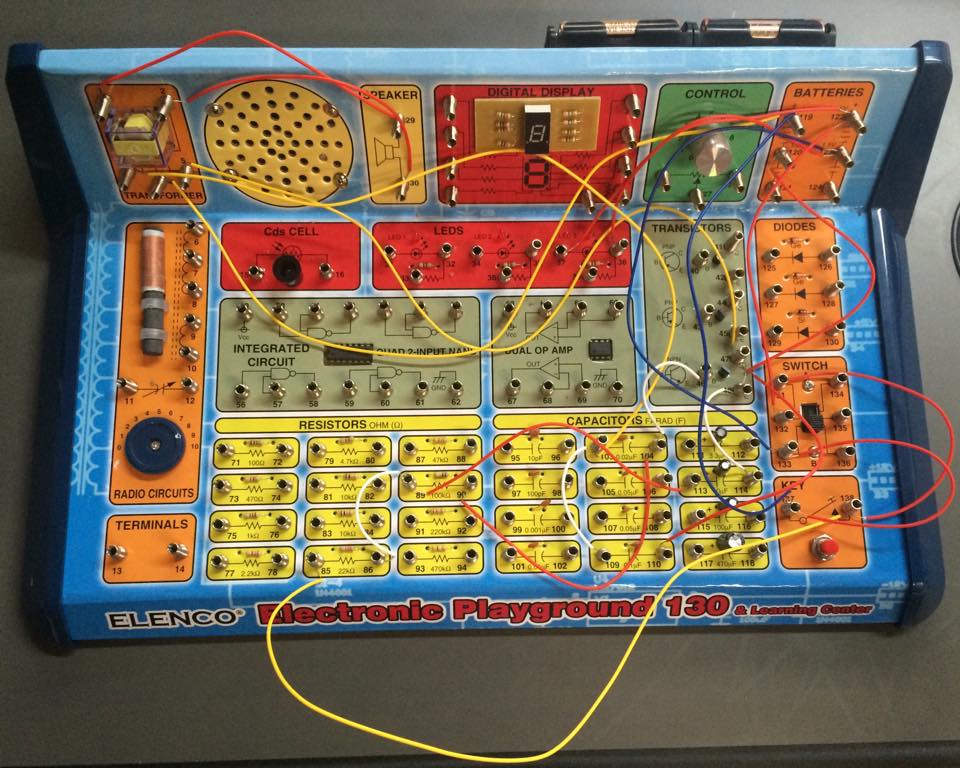
Our second Urban Planning unit is called Power, it is about powering cities and electricity. We learned about different parts of a circuit and how electricity works. Our action project is to design our own efficient electrical plan and to build a circuit with five resistors and two switches. I’m most proud of actually making the circuit work, because it was difficult and there were a lot of wires, but we finally made it work.


11212256_945374838858419_1162001437_n.jpg
AG Circuit (2015)

AG Diagram (2015)


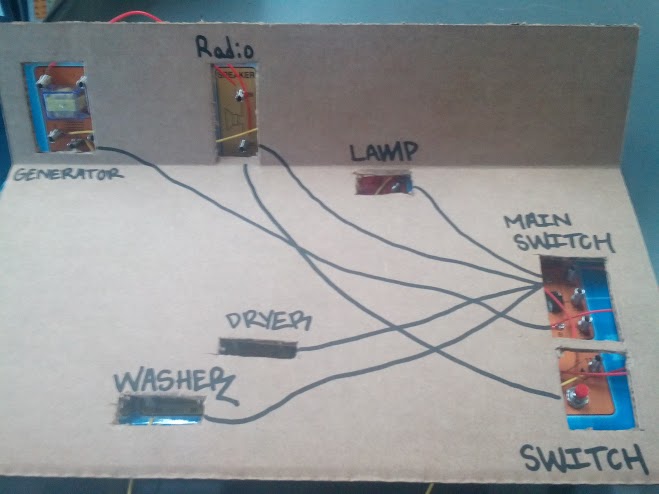
The LED light represents an LED lamp which saves about 16% of the energy that a regular lamp would use. The transformer represents a solar generator which creates 300 Joules per second. The speaker represents a hand-crank radio which saves 100% of the energy that a regular radio would use because you would crank it yourself, therefore it doesn't use any energy. The resistor represents an energy efficient washer which saves 50% of the energy that a regular washing machine would use. The second resistor represents an energy efficient dryer which saves 15% of the energy that a regular dryer would use.


circuit cover.jpg
MV Cover (2015)


Our circuit uses a total of 6 Volts
An example of Ohm’s Law would be if the speaker had a current of 3 amps, then the resistance is 2 Ohms because:
6V = 3A * x Ohms
x Ohms = 6V / 3A
x = 2 Ohms


There are two types of currents: AC which is an alternating current, and DC which is a direct current. Our circuit is DC because batteries are always DC. 


The circuit board had many options and we came up with our design by simply choosing the options we liked the most. We used the transformer because it distributes energy, the speaker because the sound was fun to mess around with, and the LED light because we wanted to be able to see something happen. Then we added the two resistors, which take up energy, at the end because we needed to have five total. The design changed a lot over time, especially towards the end where we tried to make it work with two different switches.

During the process of building our circuit we encountered a few problems, such as figuring out where to connect the wires in a way to make it all work. But we just remained persistent, kept trying different things, and followed the instructions. Doing that allows you to solve any problem however difficult it may be, so eventually we figured out the wiring and built our amazing circuit.

Work Cited